Monaco the most iconic circuit on the F1 calendar, bar none. It’s part of the triple crown and is old enough to be part of the first Formula One Season in 1950 (and even before that). It’s also completely different from any other F1 circuit. Here we look at the main things that make it unique.
- The circuit is tiny
- The Grand Prix itself is also uniquely short
- It’s by far the slowest circuit
- It has large elevation changes
- Other unique features of Monaco
- Conclusion
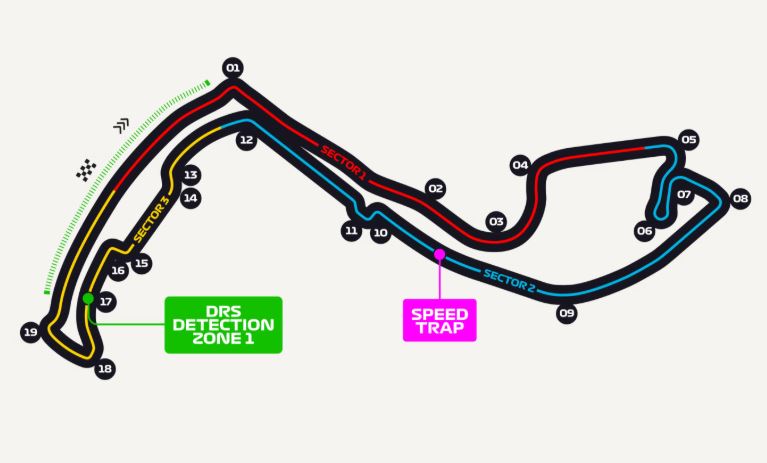
The circuit is tiny
Monaco is by far the shortest circuit on the calendar. It’s almost a full kilometre shorter than the next shortest track (Zandvoort) and less than half the length of the longest (Spa).
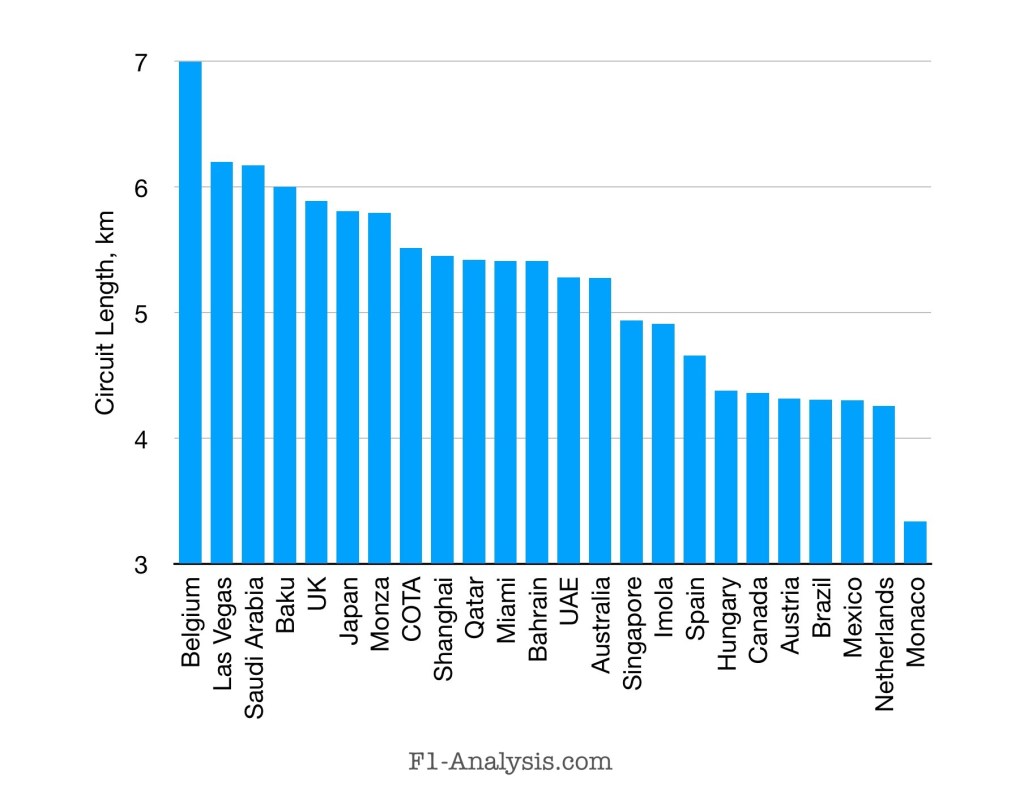
This is all the more surprising given Monaco is one of the oldest Grand Prix. Whilst Spa and Nürburgring used to be giant behemoths that have shrunk to a reasonable size today, Monaco has always been just over 3km long. Back in the 1950s it was half the length of an average F1 track. Monaco is virtually identical to the one raced on in 1929, with just a few adjustments for safety.
So why is Monaco so short? Much of it has to do with the original requirement for a Grand Prix to take place entirely within a single country, which caused several compromises due to the country’s tiny size. Many of these compromises are still present in the circuit today.
The Grand Prix itself is also uniquely short
F1 races may be different number of laps, but the numbers are chosen to keep the race distance consistent. Grand Prix are always 305km (190 miles). (This number is rounded to a full lap, of course.) The exception is Monaco, which is only around 260 miles. This is because…
It’s by far the slowest circuit
This is the most obvious way that Monaco is truly unique. It’s average speed is almost 30km/h slower than any other circuit. That’s the kind of speed difference you would typically associate with different series. The graph below gives a good indication of just how slow different it is to anywhere else.

Heck, an F4 at Monza has a higher average speed than an F1 car at Monaco!
| Format & location | approx. Average qualifying speed (km/h) |
|---|---|
| F1, Monza | 260 |
| F2, Monza | 230 |
| F3, Monza | 210 |
| F4, Monza | 190 |
| F1, Monaco | 170 |
It has large elevation changes
Only Spa and the Red Bull Ring have significantly more elevation change than Monaco. This is in itself makes the circuit notable, but Monaco also has the distinction of being a street circuit, which are typically flat. Singapore and Canada barely vary in 5m from the lowest to highest points. Monaco varies by a massive 42m. It’s hill at the start of the lap is enough to cause a sweat when walking. However, the last 2/3rds of the lap are flat as expected.

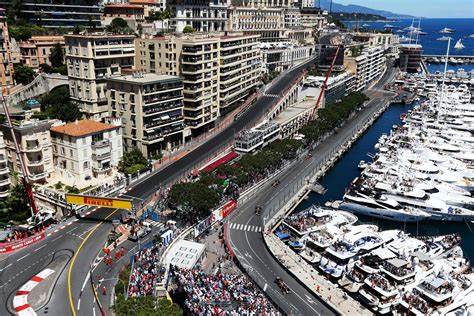
Monaco is also notoriously bumpy, leading to a significantly higher ride height than normal, with a softer suspension to boot.
Other unique features of Monaco
- Ascari swam to safety in 1955 (with the help of divers) after crashing through the barriers and landing in the harbour. Monaco still employs divers to this day for the Grand Prix. However, the risk of a repeat of Ascari’s incident are very slim in modern F1. The divers are there mainly for people who might fall off their yacht.
- There is no timing wall between the pit complex and the race track, due to the lack of space.
- Monaco also has a slower pit-lane speed limits than most circuits due to the cramped nature of the pit-lane.
- Until very recently, Monaco were in charge of the TV footage, unlike every other circuit. This lead to the infamous “Lance Stroll” meme.
- The tunnel was born out of the requirements for the circuit to be entirely within the country of Monaco. It creates unique safety concerns and also means that different parts of the circuit have different levels of dampness during the wet.
- Tickets to watch the race from yachts can go for thousands of dollars. Entry tickets to after race parties are not much cheaper.
- Until 2022 the schedule for Free Practice was unique to encourage attendees to spend more money whilst there.
- Monaco is the narrowest track on the calendar.
- Monaco also has the shortest straight on the calendar. And even the “straight“ is very much curved.
- Finally, it famously has the slowest F1 corner. It’s around around 50km/h (30 mph), and sees midfield cars almost come to a complete standstill on lap 1.

Conclusion
The restrictions on Grand Prix circuits in the 1920s caused the tiny country of Monaco to have a unique cricuit that’s persisted to this day. It’s still uniquely slow and short. Despite the regular criticism that F1 cars are unsuitable for the circuit, Monaco is still the most iconic circuit on the calendar.
Please subscribe for more content and F1 analysis.
 F1 Analysis